
PostScript
The Power of Paper: What Belongs on Paper and What Belongs on a Screen
Most documents now live on screens. A few still belong on paper, and the difference isn’t sentimental. Here’s what paper still does better than digital.
There’s a particular gesture people make with important documents. They hold them up. They turn them slightly. They tap the surface, once or twice, with a fingertip. They fold and unfold the corner. It’s a kind of physical interrogation — a way of asking the document are you what you say you are — that no screen-based document can quite invite, and no screen-based reader can quite perform.
That gesture is older than paper itself and almost certainly older than written language. It’s the same gesture used to weigh a coin, to test a stone, to sense the heft of a tool. It’s how humans evaluate physical objects for authenticity and weight, and it’s mostly unconscious. We do it without thinking, and we trust the verdict it returns.
A PDF on a phone can’t be interrogated that way. Neither can an email, a Word document, or a scanned signature on a screen. They can be read, copied, forwarded, opened in a different app, zoomed into. But they can’t be held.
This post is about what that means. Most documents today are correctly digital — they’re easier to send, store, search, and edit, and the friction of paper is no longer justified for the vast majority of what we read and write. But a few categories of document still belong on paper, and the reasons aren’t sentimental. They’re functional. Worth knowing which is which.
What digital is better at
Start here, because the case for digital documents is overwhelming for most of what people send and store.
Digital documents are searchable. The ability to type three words into a search bar and find a specific contract from four years ago is a productivity miracle that the paper era simply did not allow. Office filing was an enormous time cost; digital filing is approximately zero.
Digital documents travel instantly. A document drafted in Sydney can be in the hands of a counterparty in Frankfurt thirty seconds later. The pre-digital alternative was couriers, telegrams, faxes, or weeks of postal delay.
Digital documents are infinitely copyable without degradation. The hundredth copy of a PDF is identical to the first. Photocopies degrade. Carbon copies smudge. The digital era removed an entire category of friction around document distribution.
Digital documents are editable in collaboration. Multiple people can read, comment, and revise the same document, with full change-tracking, without anyone touching paper. For working documents — drafts, proposals, internal reports, briefing notes — this is genuinely transformative.
Digital documents are searchable through their contents, not just their filenames. The right phrase typed into Gmail returns the email it appeared in, the attachment it was sent with, and the thread it lived in. Paper has nothing comparable.
For the kinds of documents that fit those use-cases — and that’s most of them — digital is straightforwardly better. The case for going paper-only on a draft proposal, an internal memo, or a customer email reply isn’t a case at all. It’s nostalgia.
What paper is still better at
A shorter list, but each item is genuine.

Paper documents are tamper-evident in physical ways that digital documents are not.
A signed paper contract bears the actual ink of the actual hand that signed it. The signature isn’t an image — it’s a physical mark in physical pigment, on physical fibre, with physical texture. Altering it leaves traces a forensic examiner can detect. Replacing a page in a stapled or bound document leaves traces a careful reader can sometimes detect on their own. The integrity of a paper document is built into its substrate.
A digital signature is a string of characters representing an event. It’s mathematically robust, but it’s not physically present. It can be verified only by software, by someone who knows how to verify it, who has the tools to do so, and who trusts the verification chain. For most everyday purposes, that’s fine. For some categories of legal document, regulatory filing, and notarised statement, the physical signature is still what counts — and not coincidentally, those are the categories where paper still rules.
Paper documents are immune to platform decay.
A signed contract printed in 1995 is still readable today. A signed contract emailed in 1995 may or may not be retrievable from whatever email service held it — Hotmail, MSN, AOL — depending on whether you still have the account, whether the service still exists, whether the file format is still supported, whether your current devices can open it, and whether the cryptographic methods used to authenticate it are still considered secure. Digital documents depend on infrastructure that changes. Paper doesn’t.
The 30-year horizon of legal documents and the 5-year horizon of most digital platforms don’t match. For documents that need to last beyond the next platform migration, paper is still the safe substrate.
Paper documents create gravity.
Hand a printed letter to someone. Watch what happens to their attention. They take it. They look at it. They set down whatever they were doing. The act of receiving a physical document creates a small ceremony — a moment of focus that an email notification specifically does not.
For documents where you want the recipient to actually engage — formal correspondence, important notices, ceremonial communications — paper creates a kind of cognitive weight that digital cannot match. This is not sentimental. It’s how human attention actually works. The friction of paper, which is its disadvantage for routine communication, becomes its strength when attention is the goal.
Paper documents resist casual revision.
A printed contract cannot be silently edited in a moment of opportunism. A printed letter cannot be retroactively altered to claim something different was said. The physical fixity of paper — the same fixity that makes it inefficient for collaborative drafting — makes it authoritative for finalised communication.
The very property that makes Word documents convenient (easy editing) is what makes them inappropriate for the final version of a contract. The very property that makes PDFs better than Word for final versions (fixed layout) makes physical paper better still: a PDF is still software-readable, and software can be modified. Paper just is what it is.
Paper documents are evidentially robust.
In Australian and most Western legal systems, physical documents still carry a default evidentiary status that digital documents have to earn. A signed paper contract is presumptively authentic; a signed PDF can be authentic, but the authentication has to be performed and verified. For documents that may end up in court, in a tribunal hearing, in a regulatory audit, paper has not been displaced by digital and is unlikely to be soon.
The categories where paper still wins
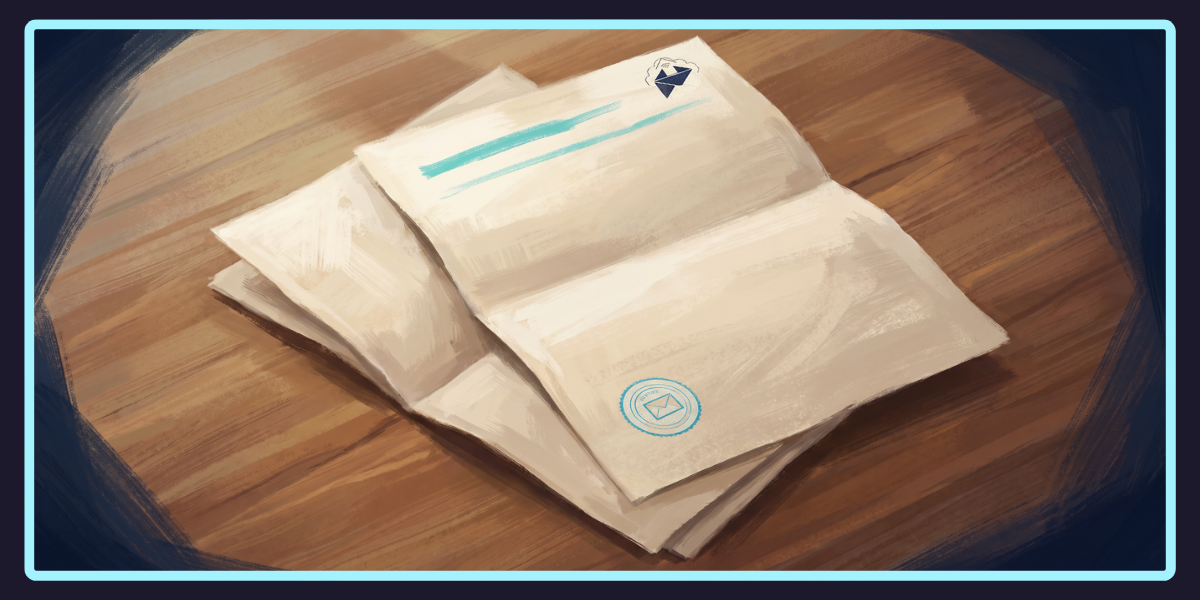
Distilling the above into specific document types:
Legal contracts at signing. Even where digital signatures are legally acceptable, paper is still the default for property settlements, corporate transactions, wills, statutory declarations, deeds, and prenuptial agreements. The combination of physical signature, fixed substrate, and evidentiary status makes paper the safer choice.
Identity documents and notarised copies. Passports, certified copies, statutory declarations witnessed by a justice of the peace. The notarisation has physical meaning — a stamp on paper, a signature beside it — that doesn’t translate.
Formal notices. Termination of employment, eviction notices, breach-of-contract notifications, demands for payment. Many of these are still required by law to be served on paper, often with physical proof of delivery.
Wills and testamentary documents. Almost universally still on paper, with witnesses present at signing.
Government correspondence that requires originals. Some tax filings, some immigration documents, some court submissions. The list shrinks every year, but the ones that remain are the ones where paper’s evidentiary status matters most.
Ceremonial and high-attention communications. A handwritten condolence letter. A formal thank-you note. A printed invitation. These are paper not because they have to be, but because the physical artefact carries the meaning. Sending them digitally is technically equivalent and emotionally diminished.
For everything else — the bulk of working life — digital wins. The paper-vs-digital question isn’t binary; it’s domain-specific, and getting it right means knowing which category your document falls into.
The hybrid reality
Here’s the thing about the modern document workflow: most documents move between paper and digital at multiple points in their lifecycle.
A contract is drafted digitally, exchanged digitally for negotiation, printed for signature, signed in ink, scanned back to digital for storage, and printed again for filing or court submission. A letter is composed digitally, printed for posting, received as paper, scanned into a recipient’s digital files. A signed form is filled out in pen, photographed by phone, emailed as PDF, archived digitally, possibly printed again at the receiving end for a paper file.
This is the actual world. Paper and digital aren’t competitors so much as different states of the same document, useful for different parts of its journey. Drafting digitally and signing on paper is the dominant pattern for any document of consequence, and probably will be for the foreseeable future.
What changed in the last decade is that the transitions between paper and digital states became friction-free. A phone camera replaced a scanner. An email replaced a fax. A print-and-mail service replaced a trip to the post office. The points where paper enters and exits the document’s life are now low-cost moves rather than friction-laden events.
That’s the actual modernisation. Not the elimination of paper, but the ease of moving between paper and digital states as needed. Most “paperless office” arguments missed this. The office became less paper-dependent, not paper-free, and the paper that remains is mostly there for good reason.
What this means in practice
A simple test for any document you’re about to send: ask which substrate is right for the next step in its life.
If the next step is being signed and held as a permanent record, paper.
If the next step is being read and replied to or filed, digital.
If the next step is being compared to other versions, edited, or annotated, digital.
If the next step is being filed in a regulatory archive that may be inspected decades from now, paper.
If the next step is being held by a recipient in a ceremonial moment, paper.
If the next step is being searched for among thousands of similar documents, digital.
There’s no universal answer. There is, for each document, a right answer.
The bridge
The point of PostMyDoc is in the gap this post has been describing — the moment when a document needs to move from digital to physical. Drafting digitally is universal now. Posting paper to someone is still the right call for the categories above. The friction used to be that you needed a printer, envelopes, stamps, and a trip to the post office to bridge the gap. That friction is what got removed.
The right relationship with paper isn’t reverence. It isn’t elimination. It’s knowing which documents earn their place on the paper side of the line, and removing the cost of putting them there when they do.
That’s the actual modern document workflow. Not paperless. Just paper-when-it-matters.